Saw palmetto extract: Nature’s answer to prostate enlargement
11/21/2025 / By News Editors
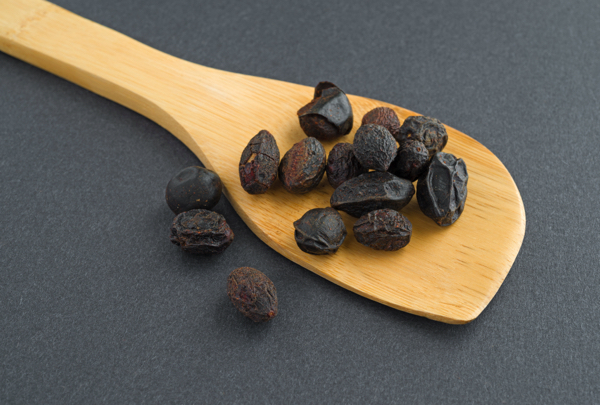
A promising study shows that saw palmetto extract can relieve symptoms of benign prostatic hyperplasia in as little as thirty days.
(Article republished from GreenMedInfo.com)
The prostate is a single, doughnut-shaped gland about the size of walnut that lies below the bladder and surrounds the urethra. The prostate secretes a thin, milky, alkaline fluid which lubricates the urethra to prevent infection and increases sperm motility. Prostate secretions are extremely important to successful fertilization of the egg.
Benign (non-malignant) enlargement of the prostate gland is known medically as “benign prostatic hyperplasia” or BPH for short. Because an enlarged prostate can pinch off the flow of urine, BPH is characterized by symptoms of bladder obstruction such as increased urinary frequency, nighttime awakening to empty bladder, and reduced force and caliber of urination.
How common is BPH?
Very. Current estimates are that it affects over 50% of men in their lifetime. The actual frequency rate increases with advancing age from approximately 5-10% at age 30 to over 90% in men over 85 years of age.1
How is BPH diagnosed?
It is often recommended that men over the age of 40 have yearly prostate exams. This exam is not high tech. It simply involves a doctor inserting a gloved finger into the rectum and feeling the lower part of the prostate for any abnormality. However, in the case of BPH, often the prostate has not enlarged to a point recognized by physical exam. And, in the case of cancer, a digital exam is not reliable enough.
The classic enlarged prostate due to BPH will usually feel softer (boggy) than normal and may be two to three times larger than normal. In BPH the prostate is non-tender, this differentiates it from prostatitis. The classic finding in prostatic cancer is that the prostate feels much harder and the border is not as well defined.
The definitive diagnosis for BPH can be made with the aid of ultrasound measurements. But, because the symptoms of BPH and prostate cancer can be quite similar, a simple blood test is used to differentiate BPH from the more serious prostate cancer. The blood test measures the levels of a protein that is produced in the prostate – prostate-specific antigen (PSA). The PSA test is regarded as a highly significant and sensitive marker for prostate cancer. The normal value for PSA is less than 4 nanograms per milliliter. An elevation above 10 is highly indicative of prostate cancer.
There has been concern that the use of PSA as a screening test for prostate cancer is not reliable enough. Although an elevated level indicates prostate cancer about 90%, it must be kept in mind that mid-range elevations in PSA can be caused by BPH and that in some instances there may be prostate cancer yet PSA levels are not elevated. Despite the fact that this test is not perfect, it is a simple, relatively non-invasive test that can provide valuable information. PSA screening has been endorsed by the American Cancer Society, the American Urological Association, and other physicians’ groups.
If you are a man over the age 50 and if any of your immediate relatives – father, brother, or uncle – has had prostate cancer, an annual prostate exam and PSA test is a very good idea.
What causes BPH?
BPH is largely the result of hormonal changes associated with aging. It is clearly dependent upon the actions of male hormones (androgens) within the prostate. These changes within the prostate reflect the many significant changes in both male (androgen), female (estrogen), and pituitary hormone levels in aging men. The main male sex hormone testosterone (T) decreases with advancing age, but estrogen, prolactin, LH, and FSH levels are all increased. The ultimate effect of these changes is that within the prostate gland there is an increased concentration of testosterone and an increased conversion of this testosterone to an even more potent form known as dihydrotestosterone (DHT). The increase in testosterone and DHT is largely due to a decreased rate of removal combined with and increase in the activity of the enzyme 5-alpha-reductase, the enzyme that converts testosterone to DHT.2 Elevated estrogen levels are thought to be the key factor which inhibits the elimination of DHT from the prostate in BPH.
Is having an enlarged prostate dangerous?
If left untreated, BPH will eventually obstruct the bladder outlet resulting in the retention of urine and eventually kidney damage. As this situation is potentially life-threatening, proper treatment is crucial. In the past, medical treatment involved a procedure known as a TURP (trans-urethral resection of the prostate). Because this surgery is associated with a high rate of morbidity and will often make matters worse, it should be avoided unless absolutely necessary.
Are herbal medicines effective in the treatment of BPH?
Yes. But, the chance of clinical success with any of the botanical treatments of BPH appears to be determined by the degree of obstruction as indicated by the residual urine content (the amount of urine left in the bladder after urination as determined by ultrasound). For levels less than 50 ml, the results are usually excellent. For levels between 50 and 100 ml, the results are usually quite good. Residual urine levels between 100 ml and 150 ml will be tougher to produce significant improvements in the customary 4 to 6 week period. If the residual urine content is greater than 150 ml, saw palmetto extract and other botanical medicines are not likely to produce any significant improvement.
Is common in other parts of the world?
Yes. Interestingly, however, is the fact that in other parts of the world (particularly Europe) herbal treatments are more popular than drug therapy. According to a recent review article published in the British Journal of Urology plant-based medicines are much more popular prescriptions in Europe than their synthetic counterparts.29 Specifically in Germany and Austria botanical medicines are considered “first-line” treatments for BPH and account for greater than 90% of all drugs in the medical management of BPH. In Italy, plant extracts are prescribed 10 times more frequently than drugs like Proscar and Hytrin.29-31
There are about 30 different plant-based compounds currently available in Europe for the treatment of BPH. But, the most popular (and seemingly most effective) is the extract of saw palmetto berry.
What is saw palmetto extract?
It is an extract made from the fruit of a palm tree (Serenoa repens) native to Florida that has been shown to significantly improve the signs and symptoms of BPH in numerous clinical studies. The mechanism of action is related to improving the hormonal metabolism within the prostate gland. As a result of multitude of effects, excellent results have been produced in numerous clinical studies. In summary, it can be stated that roughly 90% of men with mild to moderate BPH experience some improvement in symptoms during the first 4 to 6 weeks of therapy. All major symptoms of BPH are improved, especially nocturia.32-45
Although the saw palmetto extract has been shown excellent results in numerous clinical trials, results from a recent study are perhaps the most revealing.44 In this study, 305 men were given a dosage of 160 mg of the saw palmetto extract standardized to contain 85 to 95% fatty acids and sterols twice daily. After 45 days, 83% of patients estimated the drug was effective. After 90 days, the percentage increased to 88%. Similarly, global evaluations made by physicians after 45 and 90 days demonstrated 81% and 88% effectiveness, respectively. The objective evaluations demonstrated remarkable improvements in all measurements. Maximum urinary flow (ml/s) increased from 9.8 to 12.2, mean urinary flow rate (ml/s) increased from 5.8 to 7.4, prostate volume (mm3) decreased from 40,348 to 36,246; and the international prostate symptom score decreased from 19.0 to 12.4. No serious adverse reactions were reported.
While these results are impressive, perhaps the most impressive changes occurred in the quality of life scores as shown in Table 2.
Table 2. Quality of life scores

These improvements in quality of life scores demonstrate just how powerful of an effect that improving bothersome symptoms such as nocturia can have on an individuals mental outlook. Many men suffering from an enlarged prostate suffer from sleep deprivation. Improving sleep by reducing the number of times for nighttime urination is thought to be the major reason for the improvement in quality of life scores with saw palmetto extract. Another important finding from this study was that the saw palmetto extract had no demonstrable effect on serum prostatic specific antigen (PSA) levels.
How soon should I expect to see results with saw palmetto extract?
While the drug finesteride (Proscar) typically takes up to a year to produce significant benefit, saw palmetto extract produces better results in a much shorter period of time. Most patients achieve some relief of symptoms within the first 30 days of treatment with the saw palmetto extract.
Table 3 – Saw Palmetto Extract vs. Finesteride on Urine Flow Rate (ml/sec):
Pooled Data from Double-blind Studies

† Many studies on the saw palmetto extract were less than 90 days, final measurements were calculated as 90 day measurements.
‡ There are few long-term studies on saw palmetto extract, yet the effect at three months (or less) are obviously superior to Proscar.
Read more at: GreenMedInfo.com
Submit a correction >>
Tagged Under:
alternative medicine, benign prostatic hyperplasia, disease treatmentrs, health science, herbal medicine, herbs, men's health, natural cures, natural health, natural medicine, naturopathy, phytonutrients, plant medicine, prostate health, remedies, research, saw palmetto, Xpost
This article may contain statements that reflect the opinion of the author
RECENT NEWS & ARTICLES